Add your promotional text...
Understanding the New Drug Application (NDA) and How It Differs from the IND
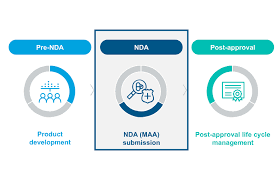
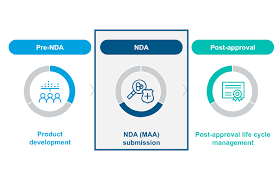
One of the most critical responsibilities in Regulatory Affairs is ensuring that a new medicine moves smoothly from research to market authorization. This transition begins with an Investigational New Drug (IND) application and culminates in a New Drug Application (NDA). Understanding the distinction between the two and the role of Regulatory Affairs professionals in each stage is essential for maintaining compliance, transparency, and scientific integrity throughout a drug’s lifecycle.
RA BLOGSALL BLOGS
11/2/20252 min read
What the IND Represents
The IND is the formal request to begin clinical testing of a new drug in humans. Before an IND is submitted, a drug candidate typically undergoes extensive nonclinical studies to evaluate safety, toxicity, and pharmacological activity. The purpose of the IND is to allow the sponsor, usually a pharmaceutical company, to ship the investigational product across state lines and to conduct clinical trials legally under FDA oversight.
The IND submission includes three key sections:
• Animal pharmacology and toxicology data to demonstrate safety for human testing
• Manufacturing information describing drug composition, stability, and control procedures
• Clinical protocols outlining study design, objectives, and investigator qualifications
Essentially, the IND is about permission to test. It ensures that human subjects are protected, and that trials are scientifically sound before any clinical investigation begins.
What the NDA Represents
The NDA, or New Drug Application, is the formal submission requesting FDA approval to market the drug for human use after all clinical trials are completed. It presents comprehensive evidence of safety, efficacy, and quality gathered throughout the development process.
An NDA contains detailed information on:
• Clinical study results demonstrating therapeutic benefits and acceptable safety profiles
• Chemistry, Manufacturing, and Controls (CMC) data ensuring consistent product quality
• Labeling proposals that communicate the drug’s intended use, dosage, and warnings
• Summaries of nonclinical data, pharmacokinetics, and biopharmaceutic properties
While the IND is about gaining authorization to study the drug, the NDA is about obtaining authorization to sell it. It marks the culmination of years of research, data analysis, and regulatory interaction.
Understanding these differences is vital for aligning development timelines and ensuring regulatory expectations are met at every stage.
My Role as a Regulatory Affairs Specialist
As a Regulatory Affairs specialist, I act as the communication bridge between the research teams, clinical operations, manufacturing, and the regulatory authority. My responsibility is to ensure that every submission, whether an IND or an NDA, follows the correct structure, format, and scientific rigor expected by global regulators.
During the IND phase, my involvement centers on compiling study protocols, verifying investigator qualifications, and ensuring that all nonclinical safety data meet FDA requirements. I also coordinate correspondence between the sponsor and the agency, especially during pre-IND meetings, where study designs and early safety plans are discussed.
During the NDA phase, my focus shifts to data integrity and submission quality. I collaborate closely with CMC teams to confirm that manufacturing and quality data comply with current Good Manufacturing Practices (cGMP). I review clinical and statistical summaries for accuracy, oversee labeling development, and support the preparation of the Common Technical Document (CTD) modules that make up the final NDA package.
This role requires both scientific understanding and strong communication skills, as I translate complex study data into regulatory language that demonstrates compliance and credibility.
The Importance of Regulatory Collaboration
The transition from IND to NDA highlights the importance of cross-functional teamwork. Regulatory professionals interact daily with departments such as Clinical Development, Quality Assurance, Nonclinical Research, and Pharmacovigilance. Through this collaboration, all sections of the application are harmonized, ensuring a clear and consistent narrative that supports the benefit–risk assessment of the product.
Conclusion
The IND and NDA are two stages of the same story: one begins the journey of human testing, and the other completes it by securing marketing approval. Understanding both processes is fundamental to the work of every Regulatory Affairs professional.
Through my training and experience, I’ve learned that the success of a new drug application depends not only on data but also on how effectively that data is presented, justified, and aligned with regulatory expectations. The Regulatory Affairs function is therefore not just about compliance, it is about connecting science, policy, and patient safety to bring valuable medicines to market responsibly.